

Every minute a trailer idles at the dock is money lost. In high-velocity environments—from express delivery hubs to cross-border e-commerce warehouses—the gap between inbound and outbound flow can turn into a costly bottleneck. A modern loading and unloading conveyor transforms this pressure point into a controlled, high-throughput process, moving cartons, totes, and parcels swiftly with fewer touches and less risk. As order volumes surge and delivery windows tighten across Asia-Pacific and beyond, operations teams are rethinking how goods move between vehicle and facility, prioritizing reliability, safety, and data-driven control.
At its core, a loading and unloading conveyor extends the facility’s material flow directly into the vehicle, replacing ad-hoc manual handling with engineered movement. Today’s systems combine telescopic booms, powered rollers or belts, and integrated controls that communicate with warehouse execution systems. The result: shorter truck dwell times, consistent package handling, and ergonomic gains for operators, all of which make the dock a catalyst—not a constraint—for growth.
Inside a Modern Loading and Unloading Conveyor: Types, Features, and Safety
Not all docks, fleets, or cargoes look alike, which is why modern solutions are modular. Telescopic belt conveyors—often called boom conveyors—are a mainstay for trailer and container access. Their extending sections reach deep into 40HQ containers and vans, moving parcels in or out at a steady rate. For operations handling varied package sizes, powered flexible roller conveyors offer adaptability, bending around columns and aligning with multiple bay doors. Gravity skate-wheel sections provide simple buffering where powered flow isn’t required. Together, these modules create a continuous path from vehicle to sorter, palletizing cell, or staging zone.
Performance lives in the details. Variable frequency drives deliver soft-start and precise speed control, minimizing package scuffing and belt wear. Auto-levelling and height-adjust mechanisms position discharge points to match trailer floor variance, while articulating heads reduce drop height to prevent damage. Advanced belt tracking systems keep material aligned, and sealed bearings extend life in dusty or humid dock environments. For facilities processing polybags and irregulars, low-friction sliders and high-grip belt options stabilize flow without snags. Integrated LED task lighting improves visibility inside trailers, and embedded scales or dimensioners can capture data in motion.
Control architecture is equally important. PLC-based systems with intuitive HMIs let supervisors adjust throughput by lane or product class. I/O for photo-eyes, presence detection, and jam sensors coordinate with upstream devices, while ethernet networking opens paths to WMS/WES, enabling real-time data on backlog, trailer status, and estimated completion times. In high-volume sites, zoning logic permits accumulation without contact, preserving package integrity. Remote diagnostics and IoT monitoring flag wear patterns and guide proactive maintenance, turning downtime into scheduled micro-stoppages rather than surprises during peak.
Safety underpins all of the above. Emergency-stop pulls along the boom, hold-to-run jog controls, guarded nip points, and anti-runback braking reduce risks at the trailer interface. Anti-collision sensors and soft bumper noses protect both people and freight. Thermal and overload protection safeguard motors, while lockout/tagout points simplify service. Compliance with regional standards—such as CE, UL, and GB/T—should be verified upfront. Ergonomic considerations matter, too: reduced lift heights and consistent work postures lower fatigue and injury potential, helping teams sustain performance through long shifts and seasonal surges.
Measurable Gains: Throughput, Labor, and ROI at the Dock
The ROI case for a loading and unloading conveyor is built on measurable gains in speed, consistency, and safety. Consider a manual unloading lane handling mixed cartons. A well-coordinated three-person team may process 500–700 packages per hour under ideal conditions. Introduce a telescopic belt conveyor with powered accumulation into that same lane, and sustained rates of 1,200–1,800 packages per hour become realistic—often with two operators instead of three. That throughput uplift shortens trailer dwell time, increases door turns per shift, and reduces detention fees, which collectively enhance the dock’s economic footprint.
Labor efficiency compounds these benefits. By shifting energy from lifting and carrying to guided placement and scanning, operations typically see a 25–50% reduction in handling effort per package. With improved ergonomics and reduced overexertion, recordable injuries drop, leading to fewer lost-time incidents and lower workers’ compensation costs. Meanwhile, gentler, controlled conveyance cuts packaging damage, which preserves margin and avoids costly reships. During demand spikes—think Singles’ Day or Black Friday—conveyors stabilize output, letting managers meet service-level agreements without relying exclusively on temporary labor.
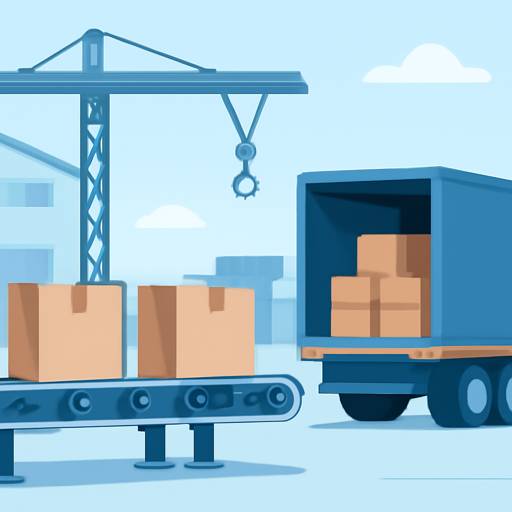
Financially, total cost of ownership beats first cost. While capital expenditure varies by configuration and reach, the payback period for a high-utilization dock often lands between 6 and 18 months. Energy consumption is modest compared with other industrial assets, and smart drives reduce power at idle. Predictive maintenance further protects uptime: condition-based alerts help maintenance teams replace belts, rollers, and sensors on schedule, avoiding cascading failures during peak cycles. Add to this the data dividends—cycle times per trailer, queue length visibility, exception tracking—and the dock evolves into a transparent, optimizable node within the larger supply chain.
Local factors strengthen the equation in fast-growing logistics corridors. In export-heavy regions and free-trade zones, containerized freight mixes with parcel traffic, demanding versatility across weights and package formats. The right system enables quick reconfiguration between B2B palletized dispatch in the morning and B2C small-parcel injections later in the day. On cross-border routes, tighter customs windows and carrier appointment slots reward docks that consistently hit target flow rates. In all cases, the conveyor acts as a force multiplier—maximizing the value of every square meter of dock space and every minute of driver time.
How to Choose and Deploy the Right System: Scenarios and Best Practices
Start with the product and the process. Map the SKU mix, typical carton sizes, weight ranges, and packaging types (corrugate, totes, polybags). For predominantly small parcels and poly mailers, select belt surfaces and side guides that minimize catch points. If irregulars and bulkier items are common, consider powered rollers with zones that allow gap creation for scanning or diverging. Document trailer and container formats—vans, box trucks, 20/40-foot containers—so the telescopic reach, boom elevation, and articulation match real-world geometry. Floor flatness, overhead obstructions, and door pitch all influence the final spec.
Then align the conveyor to workflow. If parcels go straight to sortation, prioritize smooth handoff heights and accumulation capacity. For dock-to-stock in a fulfillment center, ensure sufficient buffering near receiving so upstream momentum doesn’t overwhelm putaway teams. If outbound loading is the focus, choose reversible conveyors and ergonomic discharge heads that support tight trailer stacking patterns. Where multiple doors share a single flexible line, quick-connect power, robust castors, and simple alignment markers reduce changeover time. Accessories—from operator platforms and LED lighting to articulating gravity outfeeds—round out the ergonomic package.
Technology integration should be non-negotiable. Specify open communications (e.g., ethernet-based protocols) so the conveyor can exchange states with WMS or WES: “trailer open,” “flow requested,” “lane blocked,” and “completion.” Add barcode or QR scanning to capture package IDs at the point of entry, feeding inventory visibility. For high-service operations, tie trailer assignment into appointment scheduling systems, enabling automated prompts to pre-stage conveyors at the correct door ahead of arrival. Real-time dashboards displaying package counts, estimated time to complete, and alarms help supervisors balance labor across lanes before bottlenecks form.
Deployment success follows disciplined execution. A thorough site survey and 3D layout review uncover pinch points early. Risk assessments inform safety features and operator training plans. Commissioning should include belt tracking checks, zone logic validation, and end-to-end throughput trials with live cartons, not just test loads. Build a maintenance playbook: daily walk-arounds for debris and wear, weekly roller and sensor checks, quarterly belt tensioning and alignment, and an annual deep service with spare kits on hand. Clear OEE baselines and KPIs—packages per labor hour, turn time per trailer, exception rate—keep continuous improvement grounded in data.
Practical examples abound. A regional express depot handling 8–12 trailer turns per door per shift can standardize on telescopic belts with accumulation to double effective capacity without adding bays. A cross-border e-commerce facility receiving mixed containers can pair boom conveyors with flexible powered lines to route cartons directly to inspection or storage, adapting on the fly as product mixes change. For operations building pallets outbound, reversible booms feed build stations with consistent cadence, letting lift-truck drivers move finished pallets just-in-time instead of queuing. To explore configurations suited to these scenarios, review solutions categorized under loading and unloading conveyor.
Above all, design for the future. Volumes shift, product lines evolve, and service promises get tighter—not looser. Choosing modular, serviceable equipment with strong controls and safety fundamentals ensures the dock can flex with the business. When the right loading and unloading conveyor is matched to the right process, the dock stops being a bottleneck and becomes a dependable engine of flow, day after day, peak after peak.
