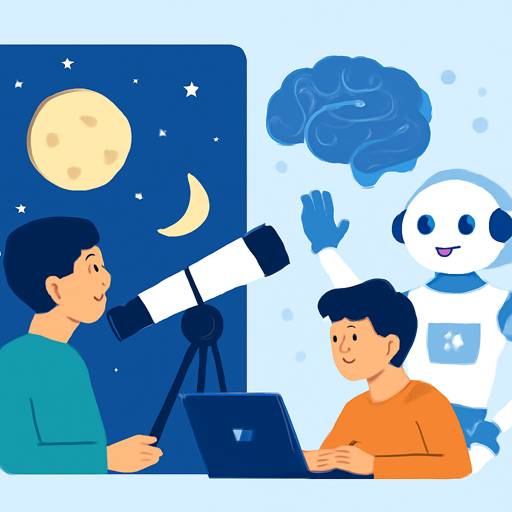
From Stargazing to Bots: A Student Playbook for Space, Mind, and Machine
FlorencePHarrelson,
Classroom-to-Cosmos Pathways: Astronomy Research Ideas and Space Telescope Projects
Turning curiosity about the night sky into publishable research is easier than it seems when the workflow is broken into achievable steps. Start with well-scoped astronomy research ideas that leverage abundant public data: variable star photometry, asteroid light-curve modeling, exoplanet transit timing variations, and galaxy morphology classification are all rich with discovery potential. Public archives such as the MAST portal for Hubble and TESS, plus all-sky surveys, offer terabytes of images and time-series data that students can analyze without building a telescope. This democratizes access to genuine Space Telescope Projects, where analysis—not expensive hardware—drives impact.
For time-domain astronomy, exoplanet light curves are especially approachable. Students can download candidate system data, fit transit models, and test for period drift using Python toolkits. A rigorous plan might include data cleaning (outlier rejection and detrending), model fitting (least-squares or MCMC), and error analysis (bootstrap resampling). Similar pipelines apply to eclipsing binaries and pulsating stars: extract photometry, phase-fold signals, estimate parameters, and compare against catalog baselines. Even a modest DSLR on a stable mount can produce usable photometry of brighter targets, especially when combined with open-source calibration tools for darks, flats, and bias frames.
Imaging projects can span planetary and deep-sky targets. Planetary imaging with lucky stacking sharpens details on Jupiter or Saturn, while deep-sky projects challenge students to optimize exposure time and signal-to-noise for galaxies, nebulae, or clusters. Spectroscopy adds a new dimension: with an inexpensive slitless grating, students can record stellar spectra and estimate temperature classes or detect hydrogen-alpha emissions in nebulae. This opens doors to physical inference—turning color gradients and spectral lines into real measurements of composition and motion via Doppler shift.
Real-world inspiration is everywhere: citizen science groups have helped validate exoplanet candidates in TESS data, and volunteer classifiers have accelerated galaxy morphology research. Emulating these collaborations, student teams can form roles—data wranglers, modelers, and writers—to mirror professional practice. For an end-to-end capstone, propose a compact Space Telescope Projects theme: select a TESS target, reproduce the official ephemerides, seek residuals suggesting additional bodies, and draft a short report with figures, methods, and uncertainty budgets. The combination of accessible data, transparent analysis, and disciplined documentation transforms amateur-level observing into authentic research.
Cognitive Science for High School: Mind Experiments, Data Literacy, and AI Connections
Designing a robust behavioral study is a powerful way to learn the logic of science while exploring how people think, learn, and decide. Entry points include classic paradigms that are easy to implement and rich in theory: the Stroop task for executive control and interference; the n-back or digit-span for working memory; visual search for attention; and serial position effects for memory encoding. High schoolers can run within-subjects experiments, record response times and accuracy, and compute effect sizes alongside t-tests or nonparametric alternatives. The critical ingredient is predefining hypotheses and analysis plans to avoid “fishing” for significance.
Ethics and rigor belong in the classroom. Projects should use anonymous data, informed assent, and debriefs that explain the purpose without deception when possible. Students can practice preregistration by writing a simple plan: participant pool, task instructions, variables (independent vs. dependent), statistical tests, and exclusion criteria. Replication studies—repeating a known effect—teach the value of reproducibility and help students appreciate variance, power, and sample size considerations. Visualizations matter: clean plots with confidence intervals show patterns better than raw tables.
The field’s frontier overlaps with technology. Human-computer interaction studies can test interface designs for reading vs. scanning; working memory experiments can evaluate note-taking modalities; and decision-making tasks can compare frames, anchors, or defaults to reveal cognitive biases. Linking to AI, students can analyze how language models differ from human recall or categorization by designing analogous prompts and comparing error patterns. Embodied cognition opens another avenue: how posture, gesture, or movement influences memory or comprehension—perfect for integrations with wearable sensors that capture heart rate or motion to relate physiological arousal to performance.
Data literacy is the unifying theme. Students should learn to clean datasets, check assumptions, and communicate uncertainty. Short reflections on ecological validity (does the lab task map to real life?), construct validity (does the measure capture what it claims?), and potential confounds build scientific maturity. For an applied capstone, teams can synthesize insights into a design recommendation: e.g., a study of color contrast and reading speed that informs accessible slide templates for school presentations. The experience mirrors real cognitive science—iterative, ethical, and grounded in measurable outcomes.
Humanoid and Swarm Robotics for Students: From Biped Gaits to Collective Intelligence
Robotics brings theory to life by fusing mechanics, control, perception, and software. For humanoid robotics for students, small servo-based kits with IMUs and modest microcontrollers are ideal. Start with a stable stance and center-of-mass awareness: estimate body pose from the IMU, then tune proportional gains for balance. Early gaits can be open-loop (predefined steps), but even a basic feedback layer—adjusting ankle pitch when tilt exceeds thresholds—dramatically improves stability on uneven surfaces. Inverse kinematics can be introduced gradually: first for the arms to reach labeled targets, then for hips and knees to manage step height and clearance.
Vision adds capability. A low-resolution camera with color segmentation can track markers for simple object pickup tasks. Depth sensing, where available, supports obstacle avoidance and footstep planning, but even monocular cues and AprilTag-style fiducials enable reliable navigation in a classroom arena. Students can implement finite-state machines for walking, turning, reaching, and grasping; then migrate to behavior trees for clearer, modular logic. Introducing ROS 2 and simulation tools lets teams prototype new controllers before risking hardware—saving time and servos. Safety habits—current limiting, temperature monitoring, and emergency stop routines—should be part of every build.
On the collective side, Swarm robotics student projects are a model of systems thinking. Start with three to ten wheeled micro-robots and simple rules: cohesion, separation, and alignment (a Boids-style flock), plus a light-seeking objective. Experiment by changing communication topologies (broadcast vs. neighbor-to-neighbor) and measuring metrics like time-to-goal or energy usage. Stigmergy—coordination via environment—can be simulated with floor markers or digital maps that accumulate “pheromone” values updated by the robots. Task allocation is an accessible research question: compare threshold-based role switching (e.g., worker vs. explorer) to market-based bidding for tasks such as item retrieval or area coverage.
Case studies from student competitions show attainable milestones: formations that maintain shape despite a failing unit; search-and-rescue drills with colored targets; and distributed mapping where each robot fuses local grids into a global occupancy map. Simulation platforms help scale beyond limited hardware to test 50-100 agents under latency and packet-loss models. Performance analytics—robustness to dropout, scalability with group size, and sensitivity to noise—turn demos into publishable findings. Teams that blend cognition and control can test human-swarm interfaces: sliders to set global goals, gestures that nearby robots relay as commands, or adaptive autonomy where the swarm requests help when confidence dips. To explore curated resources and opportunities, see Swarm robotics student projects that connect curricula, kits, and real-world challenges.
The biggest gains come from integration. A humanoid can anchor a swarm as a high-capability node—lifting objects or interpreting human instructions—while smaller agents scout and localize. Students can prototype a warehouse scenario: the humanoid handles shelf tasks; the swarm continuously updates a heatmap of aisle congestion and guides routes. Evaluation blends engineering and science: measure throughput, collision rate, and operator workload in controlled trials. Along the way, emphasize humanoid robotics for students as a gateway to biomechanics and control theory, and swarms as an entry to distributed systems and resilience—the very ideas that power tomorrow’s factories, farms, and planetary exploration missions.
The digital landscape is ever-evolving, and the *UG991* platform stands out as a dynamic service, offering a range of capabilities to users around the globe. This platform not only serves its primary functions but also provides various alternatives for enhanced user experience, making *UG991 alternatif* solutions worthy of consideration. Getting…
En 2026 el panorama de los casinos online sigue evolucionando a gran velocidad: nuevas tecnologías, regulaciones locales y una oferta de juegos cada vez más amplia redefinen lo que significa jugar en línea de forma segura y entretenida. Esta guía te ayuda a identificar los mejores casinos online 2026 según…
What Instant Payouts Really Mean and How They Work When players talk about instant payouts, they’re picturing winnings that hit their bank or wallet within minutes of tapping “Withdraw.” In practice, “instant” usually refers to two layers working together: the casino’s approval speed and the payment rail’s settlement speed. A…